Running ShoesRunning TipsRunning ToolsShoe GuideRelease Calendar
runnerscove.comMain Site
StrideAi Training Builder

What’s your next finish line?

Pick a distance to build a VDOT-calibrated schedule with step-back weeks and 1-click calendar export in 30 seconds.

VDOT Paces 4th-Week Deloads Free Calendar & PDF
Trail runner running along coastal green ridge at sunrise
Runner’s Cove Training Lab
80/20 Pacing · Safe Progression
v2.6

How StrideAi Works

Build your custom training block in four steps.

Step 1

Select Distance

Pick 1 Mile, 5K, 10K, Half, Full Marathon, Ultra, or Get Fit.

Step 2

Share Your Routine

Set your current weekly base, run days per week, and long run day.

Step 3

Dial In Paces

Enter a recent race or target finish time to calibrate your pace zones.

Step 4

Train & Export

Check off runs right in your browser or export to Calendar, PDF, or CSV.

Runner performing a lactate threshold and VO2 max workout
Exercise Physiology

Every workout phase matches your aerobic threshold, VO2 max, and recovery window.

The Science Behind Our Training Plans

Structured periodization keeps you building fitness without burning out. StrideAi combines progressive overload, regular deload weeks, and polarized 80/20 pacing with Jack Daniels’ VDOT pace formulas so every workout has a clear purpose.

Progressive Overload

Weekly volume builds gradually with step-back recovery weeks every 3–4 weeks so tendons and joints adapt safely.

Polarized 80/20 Pacing

Conversational easy runs surround speed sessions and weekend long runs so you show up fresh for key workouts.

80/20 Polarized · Every 4th Week Deload

Training Block Benchmarks by Race Distance (1 Mile to 100K Ultra)

Standard duration, weekly run frequency, peak long run targets, and physiological focus. Click any distance to start.

Comparison of StrideAi running training plans by race distance, duration in weeks, weekly run frequency, peak long run distance, physiological focus, and recommended running shoe guides.
Race DistanceBlock & DaysPeak Long RunPrimary FocusGear Guide
1 Mile (1.6 km)6 Wks · 3–6d/wk4–8 miVO2 max turnover, 200m–800m track repeats & running economyTrack Shoes →
5K (3.1 mi)8 Wks · 3–6d/wk5–9 miAerobic base + VO2 max intervals (400m–1000m repeats)5K Shoes →
10K (6.2 mi)10 Wks · 3–6d/wk7–12 miLactate threshold cruise intervals & stamina progression10K Shoes →
Half Marathon (13.1 mi)12 Wks · 3–6d/wk11–15 miSustained tempo runs, threshold clearance & 2-week taperHalf Shoes →
Marathon (26.2 mi)16 Wks · 4–6d/wk18–20 miGlycogen durability, marathon goal-pace blocks & 3-week taperMarathon Shoes →
50K Ultra (31.1 mi)16 Wks · 4–6d/wk20–24 miBack-to-back weekend long runs, uphill hiking & 60–90g/hr fuelingTrail Shoes →
100K Ultra (62.1 mi)20 Wks · 4–6d/wk26–32 miMountain durability, back-to-back weekends, night gear & GI trainingUltra Shoes →
Get Fit (Time-Based)8 Wks · 3–5d/wk35–60 minLow-stress conversational Zone 2 habit & run/walk intervalsDaily Shoes →

Reference Training Pace Zones by Race Time (5K, Half Marathon & Marathon)

Sample Jack Daniels VDOT & Riegel pace zones showing why Easy Runs stay 60–120 seconds slower than race pace.

Full Pace Calculator
Reference running training pace chart showing Easy Run Pace, Marathon Pace, Lactate Threshold Tempo Pace, and VO2 Max Interval Pace for equivalent 5K, Half Marathon, and Marathon finish times.
5K BenchmarkEquivalent HalfEquivalent MarathonEasy & Long (Zone 2)Tempo / ThresholdVO2 Max Intervals
20:00 (6:26/mi)1:32:003:12:008:00–8:30 /mi6:48 /mi6:20 /mi
22:30 (7:14/mi)1:43:303:36:009:00–9:34 /mi7:38 /mi7:08 /mi
25:00 (8:03/mi)1:55:004:00:0010:00–10:38 /mi8:30 /mi7:55 /mi
28:00 (9:01/mi)2:09:004:28:0011:10–11:54 /mi9:30 /mi8:52 /mi
32:00 (10:18/mi)2:27:005:05:0012:45–13:35 /mi10:52 /mi10:08 /mi
36:00 (11:35/mi)2:45:305:42:0014:20–15:15 /mi12:14 /mi11:25 /mi
Runner’s Cove Ecosystem

Training Tools, Race Shoes & Prep Guides

Pair your training schedule with our pace calculators, distance shoe roundups, and race-morning guides.
Visit runnerscove.com
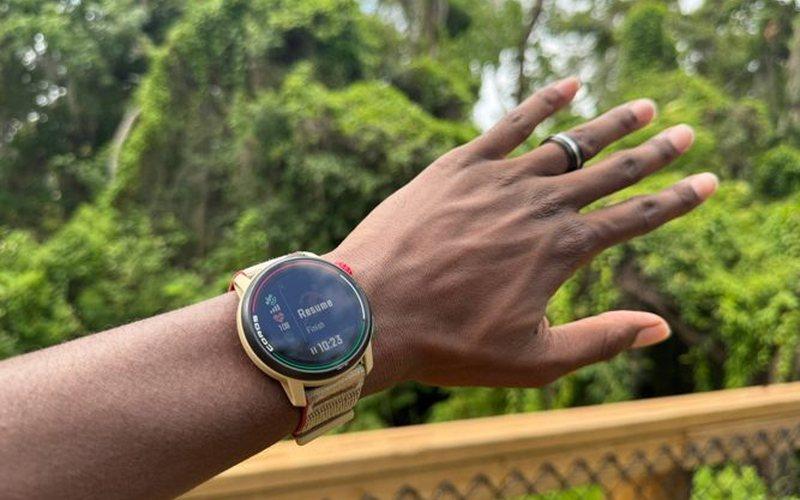
Runner checking GPS pace watch

Running Tools & Calculators

Pace calculators, marathon gel fueling, sweat hydration, and VDOT tools.
Open Tools Suite
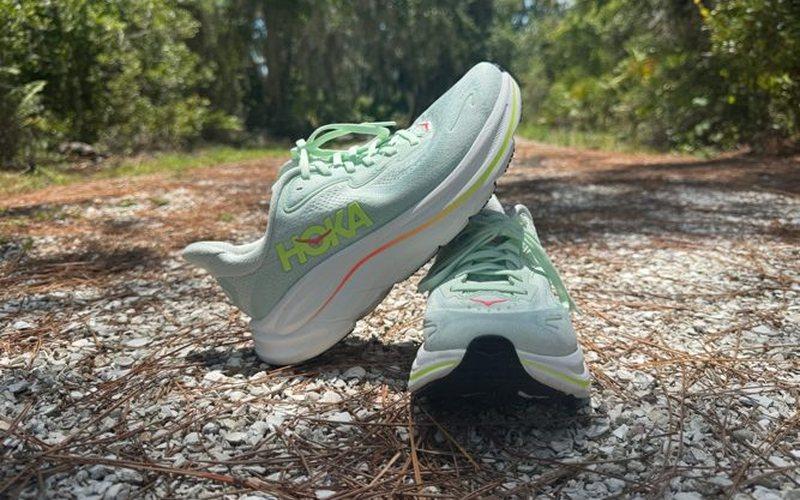
Road running shoes on asphalt pavement

Running Shoe Guides

In-depth shoe reviews and biomechanics roundups for road, track, and trail.
Browse Shoe Reviews
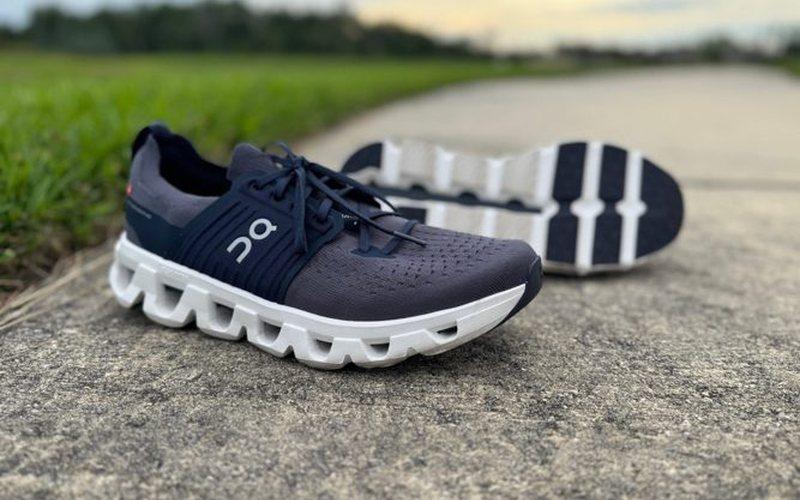
Pair of performance running shoes on track

Shoe Release Calendar

Track upcoming running shoe launch dates across Nike, Brooks, HOKA, and Saucony.

View Launch Dates
Race Timeline Guide
Best Marathon Running Shoes

Max-cushion & carbon-plated picks built for 26.2 miles

26.2 mi
Best Half Marathon Running Shoes

Lightweight tempo & race shoes for 13.1-mile threshold speed

13.1 mi
Best 10K Running Shoes for Race Day

Snappy, responsive road racers for fast 6.2-mile efforts

6.2 mi
Best 5K Running Shoes to PR

Featherweight speed trainers & road flats for 3.1-mile turnover

3.1 mi
Best Carbon-Plated Race Shoes

PEBA super shoes compared by stack, drop, and stability

Super Shoes
Best Trail Running Shoes

Grippy lugged trail trainers for singletrack, 50K, and 100K ultras

50K / 100K
How Long to Train for a 5K, 10K, Half, or Marathon

Recommended week counts based on your current weekly base

Timeline
Marathon Fueling & Carbohydrate Calculator

Calculate exact hourly grams of carbs and gel timing

Gels/Hr
Race Potential Time Predictor

Project equivalent finish times across 5K, 10K, Half, and 26.2

Predictor
Running Split & Negative Split Calculator

Build mile-by-mile even or negative splits for race morning

Splits
What Actually Happens at Your First 5K?

Packet pickup, corrals, pacing etiquette, and race-morning nerves

1st Race
How to Choose a Running Hydration Vest

Flask capacity, bounce-free fit, and storage for long runs & ultras

Ultras
Running Shoe Release Dates Calendar

Upcoming road & trail shoe drops tracked month by month

Releases
Outsole Shoe Wear Pattern Analyzer

Read your worn outsole rubber to check heel, midfoot, or pronation wear

Gait Tool
Disney Marathon Running Shoes & runDisney Guide

Early wake-ups, castle pavement, and comfortable shoes for race weekend

runDisney
The Types of Runners You’ll Meet at a 5K

From local club speedsters to stroller parents at Saturday park races

Culture
Best Super Trainers for Marathon Training

High-stack daily trainers that protect legs during peak mileage weeks

Speed
Race-Morning Car Trunk Essentials Checklist

Throwaway warmups, safety pins, recovery slides, and post-race fuel

Checklist

Brandon S.

Founder, StrideAi & Runner’s Cove

“I built StrideAi because I needed a better way to create structured, periodized training plans for my friends, the athletes I coach, and myself. I used the AI-generated 5K plan for my own training block and improved my PR by over 2 minutes. It takes the guesswork out of pacing and progression.”

Frequently Asked Questions

Answers on StrideAi plans, VDOT pacing, and distance periodization.

How does the AI generate my training plan?

StrideAi uses advanced language models trained on exercise science, coaching methodologies, and endurance training principles alongside server-side Jack Daniels VDOT and Riegel pace math. It takes your specific inputs (fitness level, days per week, preferred long run day, and goal times) and structures a periodized plan tailored to your routine.

Is StrideAi really free?

Yes! StrideAi is a completely free tool developed by Runner's Cove. We believe high-quality, personalized training plans should be accessible to everyone, not just those who can afford a private coach.

Can I print or export my training plan?

Yes! Every generated plan includes one-click export buttons at the top of your schedule for PDF (ready to print), CSV (for spreadsheets), and .ics Calendar (for Apple, Google, or Outlook Calendar). Your active plan is also saved automatically in your browser.

What training philosophy does the AI use?

The AI is heavily influenced by the 80/20 running rule (80% easy, 20% hard) popularized by Matt Fitzgerald, and uses pace calibration formulas based on Jack Daniels' VDOT tables to ensure your workouts target the right physiological intensity.

Are these running plans good for beginners?

Yes! StrideAi customizes every plan based on your current fitness level. If you select “Beginner”, the AI generates a supportive run/walk approach that safely builds your aerobic base without overwhelming your joints.

What pace should I run my easy runs?

Easy runs should be done at a conversational pace—typically 1 to 2 minutes per mile slower than your goal race pace. Our AI factors in your recent race times to provide specific target paces for every workout, or you can check our Running Pace Calculator.

How many days a week should I run?

Beginners do best starting with 3 days a week to allow for tendon and muscle recovery. Intermediate runners usually run 4–5 days, while advanced runners often run 5–6 days. StrideAi lets you select your preferred weekly frequency and builds the schedule around it.

What should I do if I miss a workout?

Don't panic! If you miss one day, just move on to the next scheduled workout. Never try to “make up” missed miles by cramming them into your next run, as sudden volume spikes significantly increase injury risk.

Should I strength train while running?

Absolutely. Strength training 1–2 times a week (focusing on calves, glutes, core, and single-leg stability) prevents overuse injuries and improves running economy. Schedule these sessions on your easy running days or cross-training days.

What is a tempo run?

A tempo run is a sustained effort at your lactate threshold pace—roughly a pace you could hold for about an hour in a race. It should feel “comfortably hard” and teaches your body to clear lactate efficiently at faster speeds.

How do I prevent shin splints?

Prevent shin splints by increasing weekly mileage gradually, rotating supportive running shoes for shin splints, running on forgiving surfaces when possible, and strengthening your calves and tibialis anterior.

5K Training

Best 5K Running Shoes Guide

How can I run a faster 5K?

To run a faster 5K, you need to incorporate speedwork—like interval training (400m or 800m repeats), tempo runs, and neuromuscular strides—into your weekly routine. StrideAi generates 5K PR plans that balance these high-intensity efforts with easy recovery runs.

How long does it take to train for a 5K from scratch?

If you are starting from zero, a standard Couch-to-5K style plan takes about 8 weeks. This allows your bones, tendons, and cardiovascular system to adapt safely using progressive run/walk intervals.

What is a good 5K time for a beginner?

For a true beginner, finishing a 5K without stopping is a great milestone! Time-wise, most first-timers finish between 30 and 40 minutes (roughly a 10:00 to 13:00 minute/mile pace). Check out our first 5K beginner’s guide for what to expect on race morning.

Should I run a 5K before race day?

Yes, unlike a marathon, it is completely normal (and recommended) to run the full 3.1-mile distance in training before your 5K race. For intermediate and advanced runners, weekend long runs in a 5K plan will often reach 5 to 8 miles.

10K Training

Best 10K Running Shoes Guide

What is a good 10K training plan for beginners?

A good beginner 10K plan spans 8 to 10 weeks and focuses on steadily building aerobic endurance through easy-paced continuous running and a gradually increasing weekend long run.

How long is a 10K in miles?

A 10K is 10 kilometers, which equals 6.21 miles. You can convert any race distance or split using our Miles to Kilometers Converter.

How far should my longest run be before a 10K?

For beginners, reaching 5.5 to 6 miles in training is plenty to finish strong on race day. For intermediate or advanced runners chasing a 10K PR, the weekend long run typically peaks between 7 and 10 miles.

Half Marathon Training

Best Half Marathon Shoes Guide

How many weeks do I need for a half marathon training plan?

A standard half marathon training plan takes 10 to 14 weeks (StrideAi uses a 12-week periodized block). If you already have a strong running base of 15+ miles per week, you can prepare in 8 to 10 weeks.

How long is a half marathon?

A half marathon is 13.1 miles, or 21.1 kilometers.

What is the longest run in a half marathon plan?

Most beginner half marathon plans peak with a 10 or 11-mile long run 2 weeks before race day. Intermediate and advanced plans typically peak between 12 and 14 miles.

How do I fuel during a half marathon?

For efforts lasting over 75–90 minutes, aim to consume 30–60 grams of carbohydrates per hour. That usually means taking an energy gel or chews every 30–40 minutes with water. Practice your exact gel timing on your weekend long runs!

Marathon Training

Best Marathon Shoes Guide

How long does it take to train for a marathon?

Most runners need 16 to 20 weeks to train for a marathon safely. Our AI-generated marathon plans are structured around a 16-week build-up with every-4th-week recovery cutbacks and a 3-week taper before race day.

What is the longest run before a marathon?

Most marathon training plans peak with a long run of 18 to 20 miles, usually completed 3 weeks before race day. Running further than 20 miles in a single training session increases recovery time and injury risk for most recreational runners.

What is tapering in marathon training?

Tapering is the 2 to 3-week period right before your marathon where you systematically reduce your weekly mileage while keeping a few short race-pace touches. This lets muscle micro-tears fully repair and tops off muscle glycogen stores for race morning.

What is “hitting the wall”?

“Hitting the wall” (usually around mile 18–20) happens when your body depletes its stored glycogen and is forced to rely primarily on fat oxidation. You can prevent it through disciplined early pacing and taking in 60g+ of carbohydrates per hour using our Marathon Fueling Calculator.

1 Mile Track & Ultra Marathon Training (50K / 100K)

Best Trail Running Shoes Guide

How does StrideAi structure 50K and 100K Ultra marathon plans?

Our 16-week 50K and 20-week 100K Ultra plans focus on time-on-feet durability, back-to-back weekend long runs, uphill power-hiking efficiency, and 60–90g/hr carbohydrate gut training—with recovery cutback weeks every 4th week and a 3-week taper.

What is a back-to-back long run in ultra training?

Instead of running 35+ miles in a single risky training session, ultra runners split peak weekend volume across two consecutive days (for example, 18–22 miles on Saturday followed by 10–14 easy miles on Sunday). This teaches you to run efficiently on fatigued legs while keeping musculoskeletal stress manageable.

How do I train for a fast 1 Mile race?

The 1 Mile distance is roughly 80% aerobic and 20% anaerobic. Our 6-week 1 Mile plan combines an aerobic base with 200m/400m repetition intervals at goal mile pace, VO2 max 800m repeats, and relaxed neuromuscular strides.

What if my generated plan feels too hard or too easy?

Once your plan is generated, use the − Easier or + Harder workload buttons in the plan header (or switch any week to Busy -25% Vol). StrideAi immediately recalibrates your mileage while preserving your preferred long run day.
StrideAi v2.6Changelog & Roadmap

Focused Single-Week Workspace, Scannable Workout Recipes & Race Kit Pairings

View UpdatesHide
v2.6 · Product-Led Workspace

Cleaner Schedule, Tabs & Gear Kit

Added 3-tab plan navigation (Schedule, Paces & Load, Race Kit), single-week focus mode, quiet rest rows, expandable coach cues, and distance-matched shoe & fueling tools.

v2.0–v2.5 · Core Engine

1 Mile to 100K + Race-Date Sync

Added 1 Mile track and 50K/100K ultra blocks, exact race-date calibration, browser workout logging, weekly heat/treadmill/busy-week adapters, and PNG Share Cards.

2027 Roadmap

Dedicated Mobile App Exploration

Exploring a native StrideAi mobile app for offline VDOT pace access, push workout check-offs, and direct GPS watch workout sync.

RUNNER'S COVEStrideAi

Science-backed running shoe reviews, interactive pace & fueling calculators, and custom AI training plans from the 1 Mile to 100K Ultras.

Interactive Tools

  • Running Pace Calculator
  • VO2 Max & VDOT Calculator
  • Marathon Fueling & Gel Calculator
  • Sweat Rate & Hydration Calculator
  • Race Potential Time Predictor

Shoe Buying Guides

  • Best Running Shoes (Daily Trainers)
  • Best Marathon Running Shoes
  • Best Half Marathon Shoes
  • Best 5K & Track Speed Shoes
  • Best Trail & Ultra Running Shoes

Runner's Cove

  • Training Tips & Guides
  • How to Choose Running Shoes
  • Shoe Release Dates Calendar
  • Shoe Wear Pattern Analysis

Disclaimer: StrideAi generates AI-powered training plans for informational purposes only. These plans are recommendations and do not constitute professional medical or athletic coaching advice. Always consult with a healthcare professional before starting any new exercise program, listen to your body, and adjust your training as needed to prevent injury.

© 2026 Runner's Cove · StrideAi. All rights reserved.

Privacy PolicyTerms of Userunnerscove.com →